CEO Taniguchi featured on THE WORLDFOLIO: “One Cloud to Rule Them All”
“THE WORLDFOLIO” is a news website that has been supported by readers around the world for over 20 years.
Our company representative, Mr. Taniguchi, was interviewed about his vision for efficient utilization of the wide variety of robots provided by “ROBO-HI OS,” as well as examples of system implementation.

Q: Your company is known for developing a robot operating system, ROBO-HI® OS. However, selling an operating system is very different from selling physical robots. Why did you decide to focus on this field, and how do you communicate its value?
A: As you say, selling an operating system is a major challenge. Unlike robots, an OS is essentially an underlying mechanism. Naturally, people tend to be more interested in the robots themselves. That is why we even changed our company name, to emphasize the message that we are not just a robot manufacturer, but a company that provides an OS.
Currently, robots operate as stand-alone devices and remain difficult to use, much like PCs in their early days. Our mission is to provide them with networks and a common interface. Changing our company name to reflect the ROBO-HI® OS was a way to demonstrate that commitment. The OS is invisible, which makes it harder to convey its value. Still, it is indispensable as the foundation for a robot society, and that is where we are focusing our efforts.

Q: In Japan, there still seems to be a strong mindset of “buying 10 cleaning robots” or “buying one security robot” as separate, individual deployments. How does your system change that way of thinking?
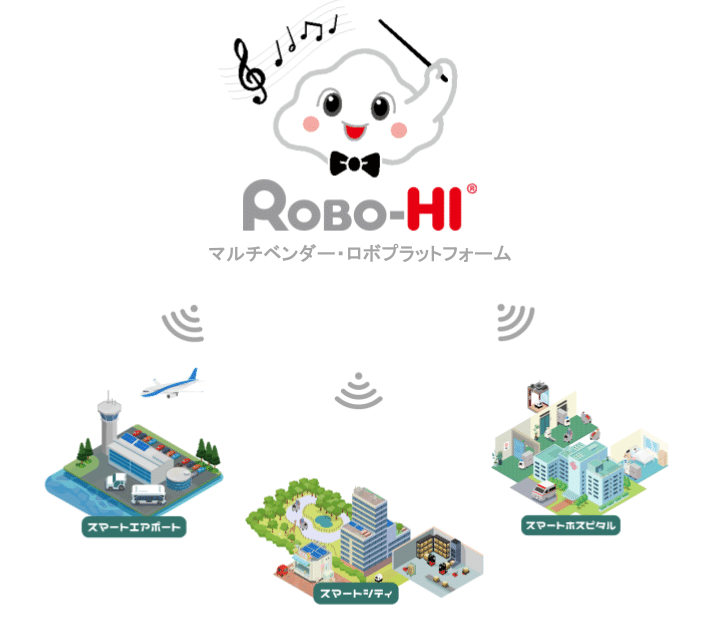
A: That is exactly the current situation. Operations are fragmented, and people say it is “too difficult.” However, at TAKANAWA GATEWAY CITY, which East Japan Railway Company is developing, we have introduced our multi-vendor robot platform ROBO-HI. Through it, delivery robots can be controlled while also coordinating with cleaning and security robots. From a single screen, you can give instructions to all robots. This is similar to how Windows 95 standardized PC networking.
At TAKANAWA GATEWAY CITY, through ROBO-HI, numerous robots from different manufacturers are connected, enabling collaborative operation across the entire district. Once people see the impact, they will understand what true progress looks like. Changing mindsets across Japan will take time, but once adoption begins, we believe it will spread rapidly—just like the PC did.
Q: What strengths do Japanese robots have compared to those made overseas?
A: Japanese robots excel as “one-stop” models that can move seamlessly between indoor and outdoor environments. Consider a delivery scenario: starting from a convenience store, passing through a gate, taking an elevator, and delivering to a specific room. Japanese robots are designed like compact automobiles and can handle this entire sequence of tasks. This is because expertise, components, and production supply chains from the automotive industry—such as sensors, safety, and reliability—have been applied to robotics. They can recognize traffic signals, withstand rain and wind, and operate stably outdoors.
In particular, Japanese-made security robots are trusted and have been introduced inside buildings. On the other hand, for simple cleaning tasks, low-cost foreign-made robots tend to be chosen. In other words, it is about the “right tool for the right job.” ROBO-HI’s strength lies in its ability to integrate and manage both types.

Q: Japan has struggled to expand globally with consumer technologies such as smartphones. How will you avoid so-called “Galápagos syndrome” and ensure the international expansion of ROBO-HI?
A: As you point out, Japan has not produced major consumer-facing giants like GAFA. However, ROBO-HI is not B2C but B2B—in other words, corporate infrastructure. Its position is closer to that of Oracle or SAP. Our customers are large-scale facilities such as office towers, airports, and hospitals. Purchase decisions are made at the corporate or institutional level, where reliability, track record, and integration are valued. Since 2023, ROBO-HI has been introduced in more than 20 large-scale facilities, and we believe this field offers a real opportunity to become a global standard.
Q: You recently partnered with Marubeni on airport logistics. Could you tell us more about this collaboration?
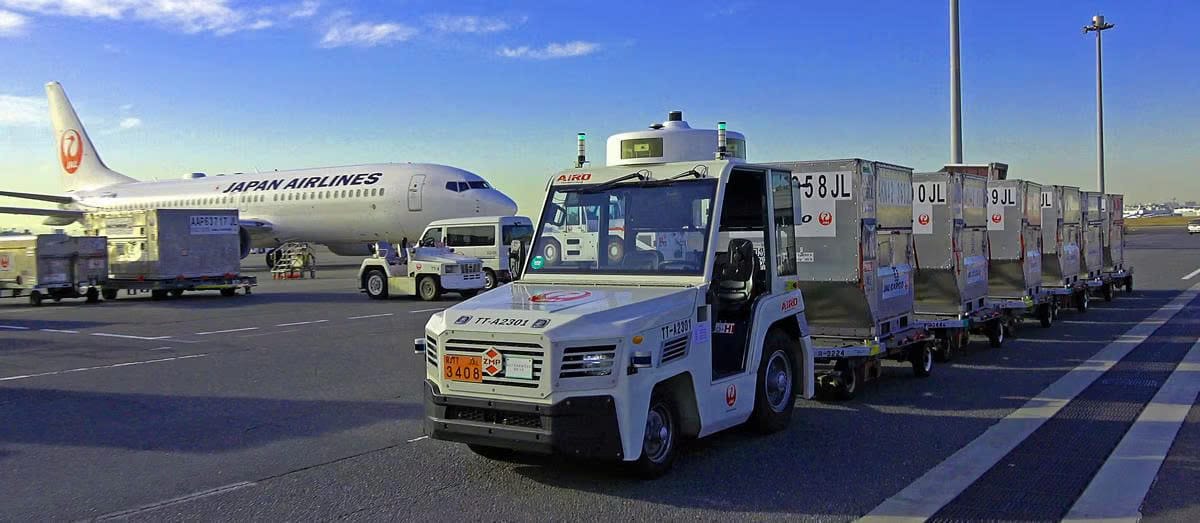
A: Marubeni Corporation is responsible for airport ground operations at Japan Airlines (JAL) and All Nippon Airways (ANA). Cargo handling is a major challenge at airports, and labor shortages have only worsened since the pandemic. We began proof-of-concept trials in 2019, and after five years of testing, we completed the final stage this year. Starting next year, we will officially launch unmanned cargo transport services at airports. Competition in this field is still limited, making it a valuable opportunity for startups.
Q: Your company will celebrate its 30th anniversary in 2031. Could you share your vision for that milestone?
First, we will focus on introducing our system into large-scale facilities such as commercial complexes, office towers, stadiums, and airports. After that, if costs come down within the next three years, we will expand into medium- and small-scale facilities as well. Like SAP, we aim to build a partner network of IT vendors to drive broader adoption.

Article Summary
Publication: “THE WORLDFOLIO”
Title: One Cloud to Rule Them All
URL: https://www.theworldfolio.com/interviews/one-cloud-to-rule-them-all/7136/