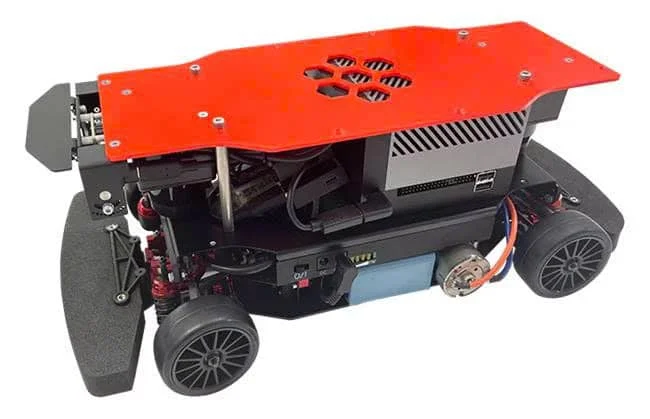
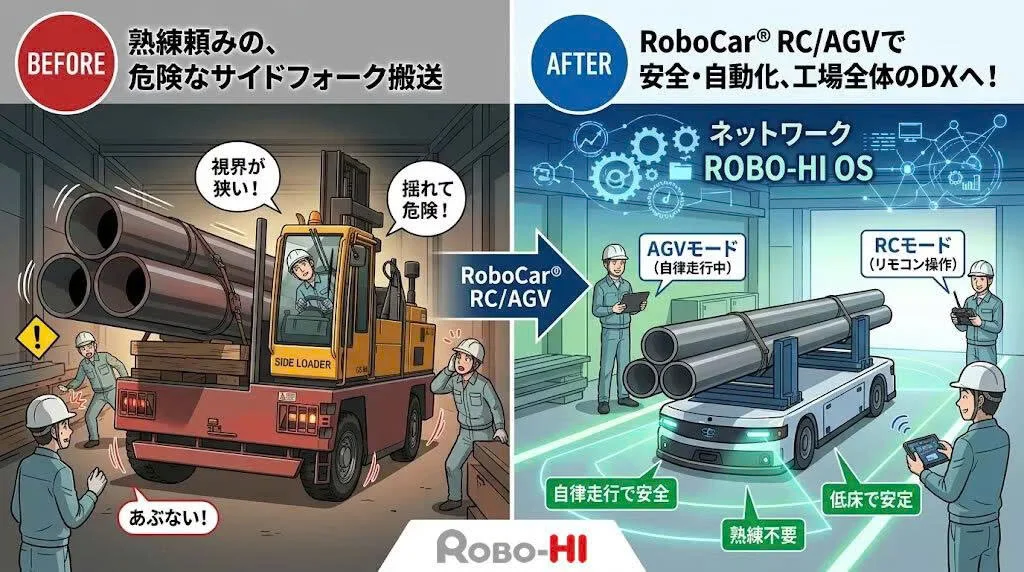
ROBO-HI Corporation has begun offering a solution that replaces side forklifts (side loaders), traditionally used to transport long and heavy loads, with the RoboCar® RC heavy-duty transport vehicle and the「RoboCar AGV」heavy-duty automated guided vehicle.
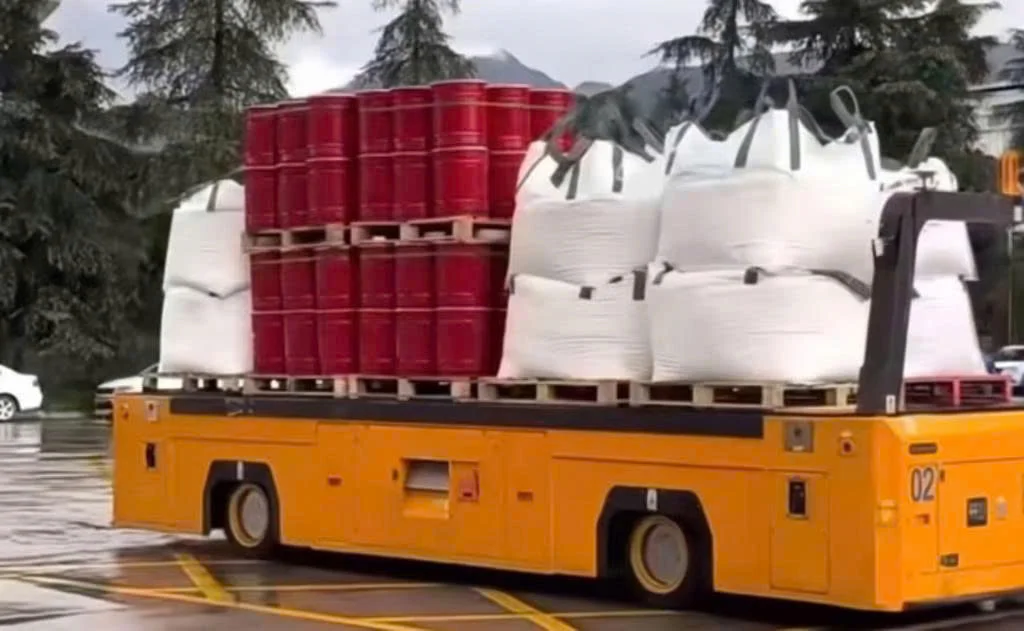
Side forklifts have long been used to transport long and heavy materials such as steel pipes, H-beams, pipes, aluminum extrusions, long coils, construction materials, and paper rolls. However, their difficult operation and risk of serious accidents have become significant challenges.
A key feature of this solution is that operations can begin with remote control (RC), and the same vehicle can later transition to autonomous operation (AGV) once routes and workflows have been established.
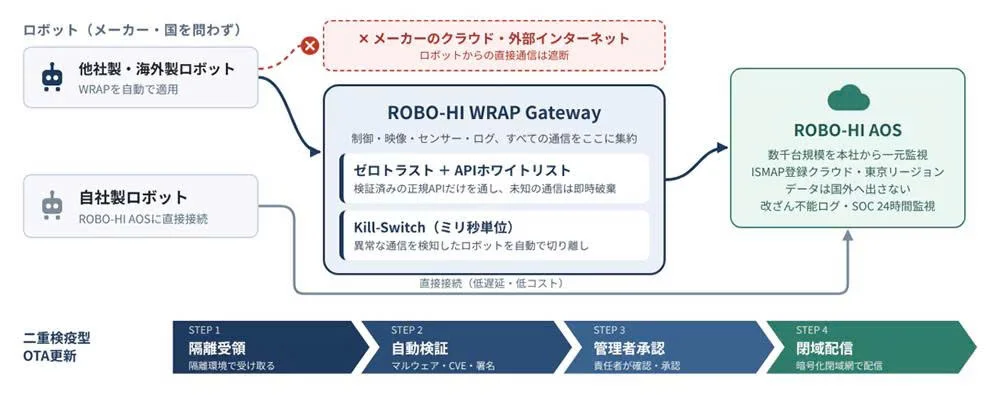
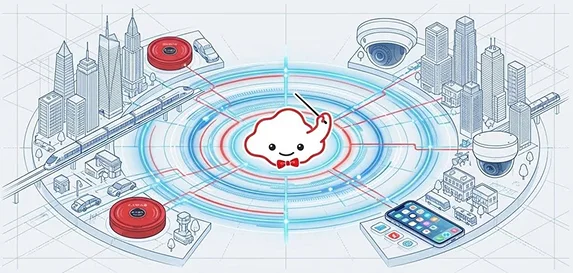
Furthermore, the multi-robot integration and control platform「ROBO-HI® AOS」and the human-robot collaboration system「ROBO-HI DANCE」connect transportation operations with other processes, equipment, and workers, enabling digital transformation across the entire factory.
Background to Development
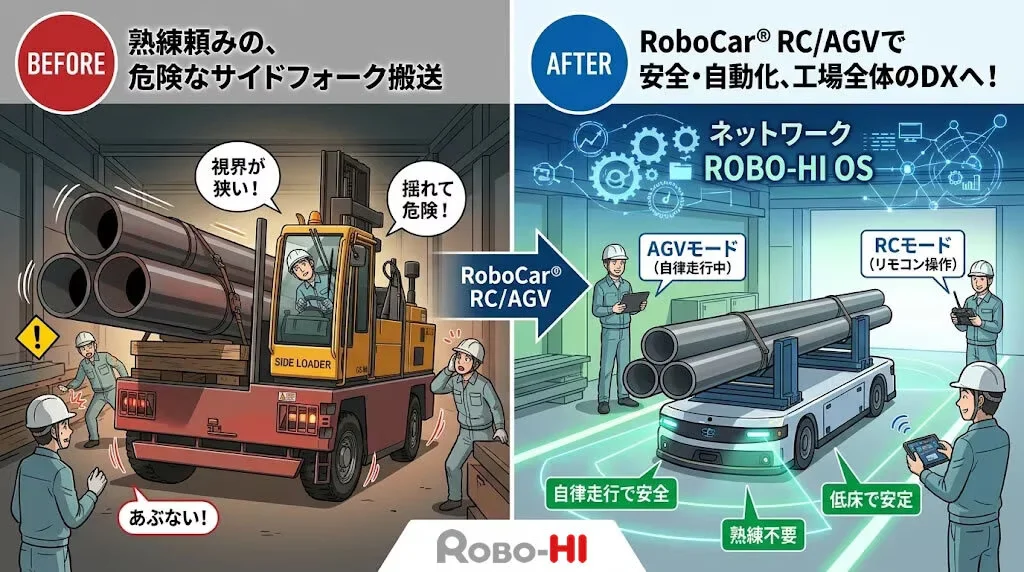
Side forklift transportation relies on operator expertise and involves significant risks
Side forklifts have been widely used for many years in steel, aluminum, construction materials, and heavy electrical equipment factories because they can transport long materials through narrow aisles. However, their structure and operating characteristics differ significantly from those of conventional forklifts, making them much more difficult to operate.
Three reasons why operation is difficult
① Side-facing driver's seat
The driver's seat faces 90 degrees sideways relative to the direction of travel. As a result, operators must repeatedly turn their heads to check the direction of travel whenever moving forward or backward. Even experienced operators may feel as though they are operating a completely different type of vehicle until they become accustomed to it.
② Large tail swing
Because loads are placed on a deck located in the center of the vehicle, the overall vehicle length is considerable. In models equipped with four-wheel steering (4WS), the front and rear of the vehicle swing significantly outward when turning, increasing the risk of contact with surrounding walls and obstacles.
③ Blind spots and load sway caused by long materials
When transporting materials such as steel pipes with vehicles in the 10-ton class, the risk of collisions during turns increases significantly. Loads are also prone to swaying back and forth while moving, requiring careful acceleration and braking.
Distinctive hazards that can lead to serious accidents
The risk of fatal or serious-injury accidents is considered higher than that associated with conventional forklifts.
① Falling or collapsing loads
Long materials can lose their balance due to even slight shifts in their center of gravity or sudden braking. If 10-ton-class steel pipes fall or collapse, the resulting accident could be fatal to nearby workers.
② Collisions or entrapment when turning
Due to the large tail swing, the rear of the vehicle or the end of the load may collide with workers or walls before the operator notices.
③ Insufficient visibility due to blind spots
When transporting high-stacked or long materials, blind spots in the direction of travel are wider than those of conventional forklifts.
Solution Overview: Replacement with RoboCar RC/AGV
This solution replaces the transportation of long and heavy materials within buildings or between buildings—tasks traditionally handled by side forklifts—with low-profile electric heavy-duty transport vehicles.
Loads are placed and transferred using dedicated support frames or skids mounted on the transport vehicle, enabling a shift to transportation that does not require an onboard operator.
Implementation proceeds in two stages:
① RC operation (remote control)
Workers operate the vehicle remotely from a safe position away from the vehicle and its load. Operations can begin within a short period without changing existing routes or layouts.
② AGV operation (autonomous driving)
Once routes and workflows have been established in specific areas, the same vehicle can be switched to autonomous operation. Repetitive, fixed-route transportation and nighttime transportation can be automated, allowing workers to focus on preparation and handling exceptional situations.
RC and AGV modes can be used together depending on the area or time of day. This allows the scope of automation to expand according to workers' familiarity with the system and the progress of equipment modifications at the factory.
Key Features of the Solution
① Eliminates side-facing, onboard driving
Workers operate the vehicle remotely from a safe position away from the vehicle and its load. Operations are no longer affected by the driver's seat orientation or the operator's familiarity with the vehicle. In AGV areas, driving itself is no longer necessary.
② Low-profile transportation prevents loads from falling or collapsing
Long materials are secured on dedicated support frames or skids mounted on a low-profile transport vehicle, keeping the center of gravity low. Acceleration and deceleration are smoothly controlled to reduce load sway caused by sudden braking.
③ Driving control prevents collisions and entrapment when turning
In AGV areas, vehicles follow routes designed to account for the swing-out range of both the vehicle body and its load. When an obstacle is detected, the system automatically slows down or stops.
④ Surrounding safety management compensates for blind spots
ROBO-HI DANCE centrally manages access to transportation areas and provides signals to workers, enabling operations that do not rely solely on direct visual checks by personnel.
⑤ Operation without reliance on highly skilled workers
Remote control can be learned in a short period. As AGV automation expands, dependence on specific operators gradually decreases.
⑥ Supports transportation of long and heavy loads from 10 to 200 tons
The RoboCar series offers models with payload capacities ranging from 10 to 200 tons, enabling the transportation of oversized and heavy materials that side forklifts cannot adequately handle.
⑦ Electrification reduces carbon emissions and improves the working environment
As the vehicles are battery-powered, they produce no exhaust emissions and help reduce noise during operation.
From Transportation Replacement to Factory-Wide DX with ROBO-HI AOS
Replacing transportation vehicles is only the starting point of digital transformation (DX). ROBO-HI AOS is a vendor-neutral platform that integrates and controls multiple types of robots and equipment regardless of manufacturer, connecting RoboCar RC/AGV to the factory's overall operational system.
① Equipment integration
The platform coordinates with existing AGV/AMR/AGF systems, cranes, automated warehouses, shutters and doors, traffic lights, and other equipment, seamlessly connecting transportation between buildings and production processes.
② System integration
It integrates with higher-level systems such as production management systems, MES, and WMS to automatically issue transportation instructions in accordance with production plans.
③ Collaboration with human operations
ROBO-HI DANCE assigns tasks between people and robots, while「EYECAN® Staff」, a guidance system for on-site workers, provides instructions for the next task through voice guidance and AR technology.
④ Data visualization
Transportation records, waiting times, and equipment utilization rates are recorded and visualized, helping identify bottlenecks and improve layouts and workflows.
Implementation proceeds in three stages:
- Replacing side forklifts.
- Automating transportation between processes and integrating equipment.
- Optimizing logistics across the entire factory.
Companies can evaluate the benefits at each stage before making decisions on further investment.