
ROBO-HI Technology
Start exploring ↓The next paradigm shift: full automation in the field
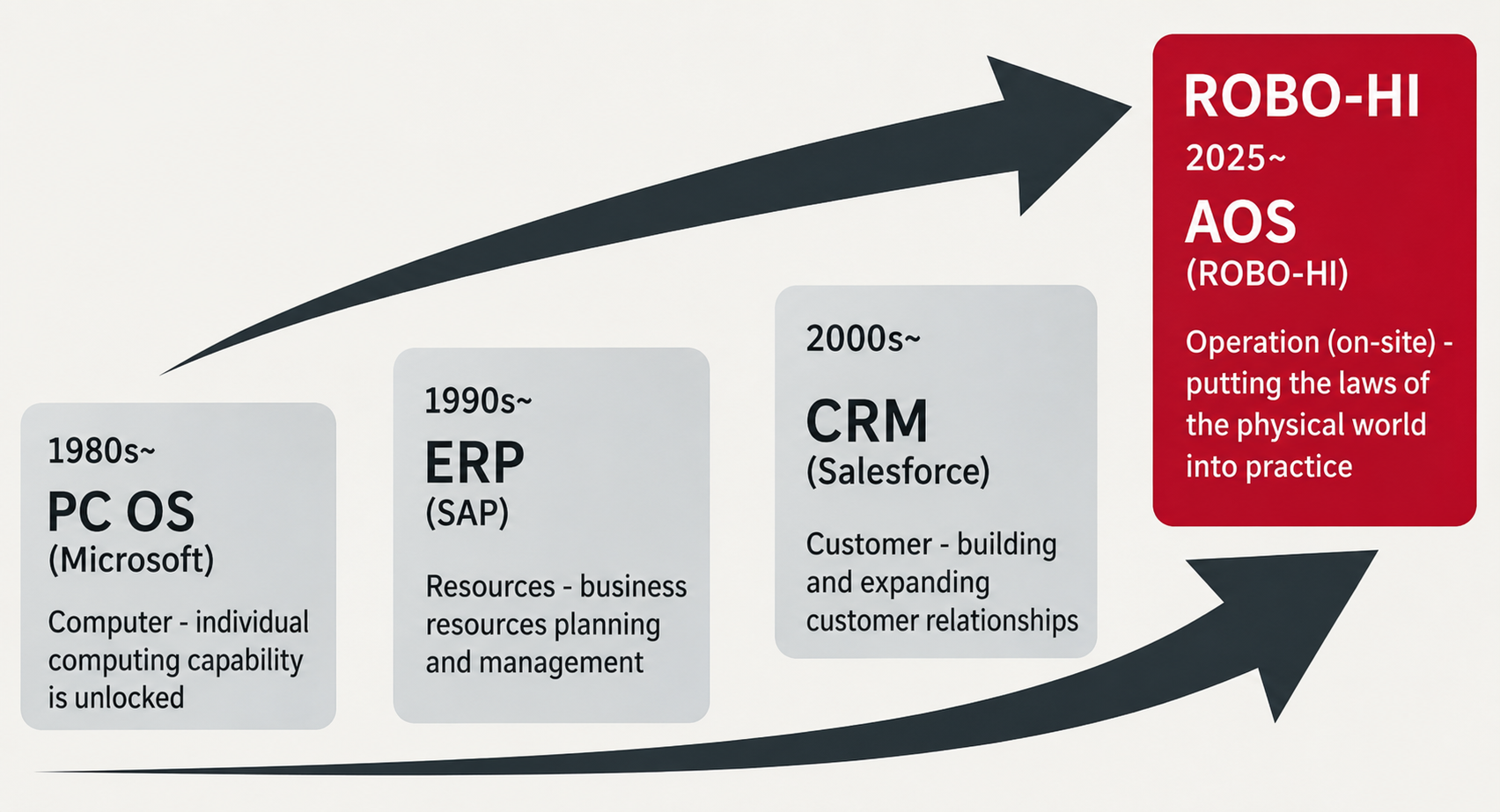
Paradigm shift: from tools to autonomous execution
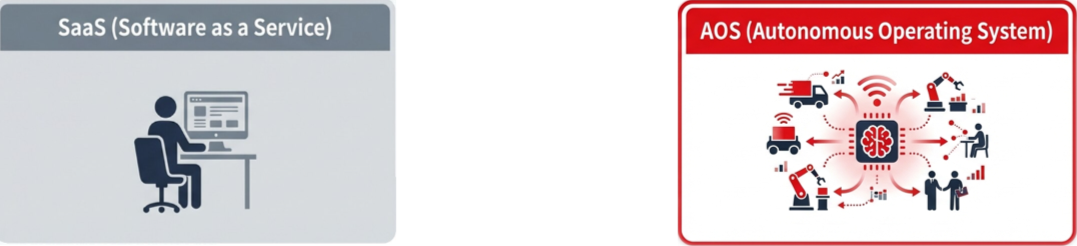
"Tools that help optimize human work"
If the user does not operate, decide, or act, nothing happens.
"Systems that complete work without human intervention"
The system makes its own decisions, controls the physical world (people, machines and devices) and produces results.
Redefining robots and the limits of "autonomous execution"
Challenges of the traditional model that tries to handle everything with robots.

Paradigm shift: distributed brain architecture
Re-balancing control between the cloud brain and the edge cerebellum
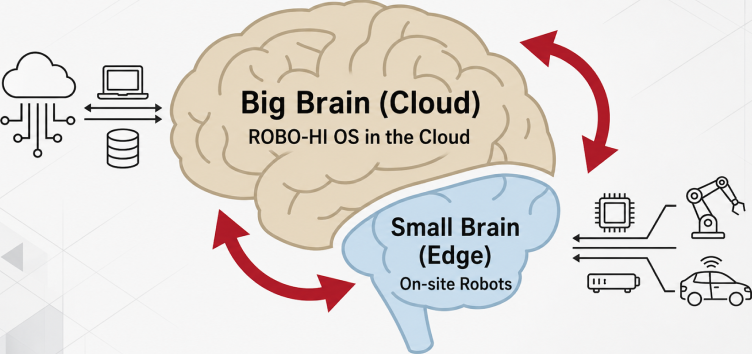
We deliver an end-to-end system connecting the cloud and the field — not just isolated robots as before.
Big brain: "ROBO-HI OS" commands the whole orchestra
The conductor of the orchestra handles advanced computation and judgement in the cloud
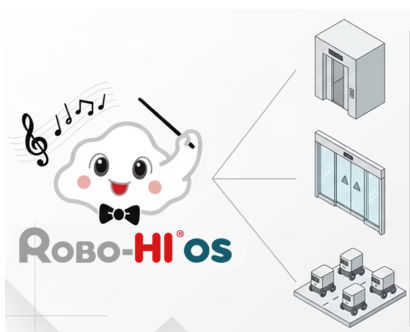
Role: Role: acts as the conductor of an orchestra, issuing detailed instructions to robots.
Compute: Compute: advanced judgement and calculation, integrated with facility infrastructure (elevators, automatic doors, etc.)
Deployment: Deployment: the autonomous-mobility software "IZAC", refined over 25 years, runs in the cloud.
Small brain: "Physical robots" react instantly in the field
Real-time control and physical action with zero tolerance for latency.
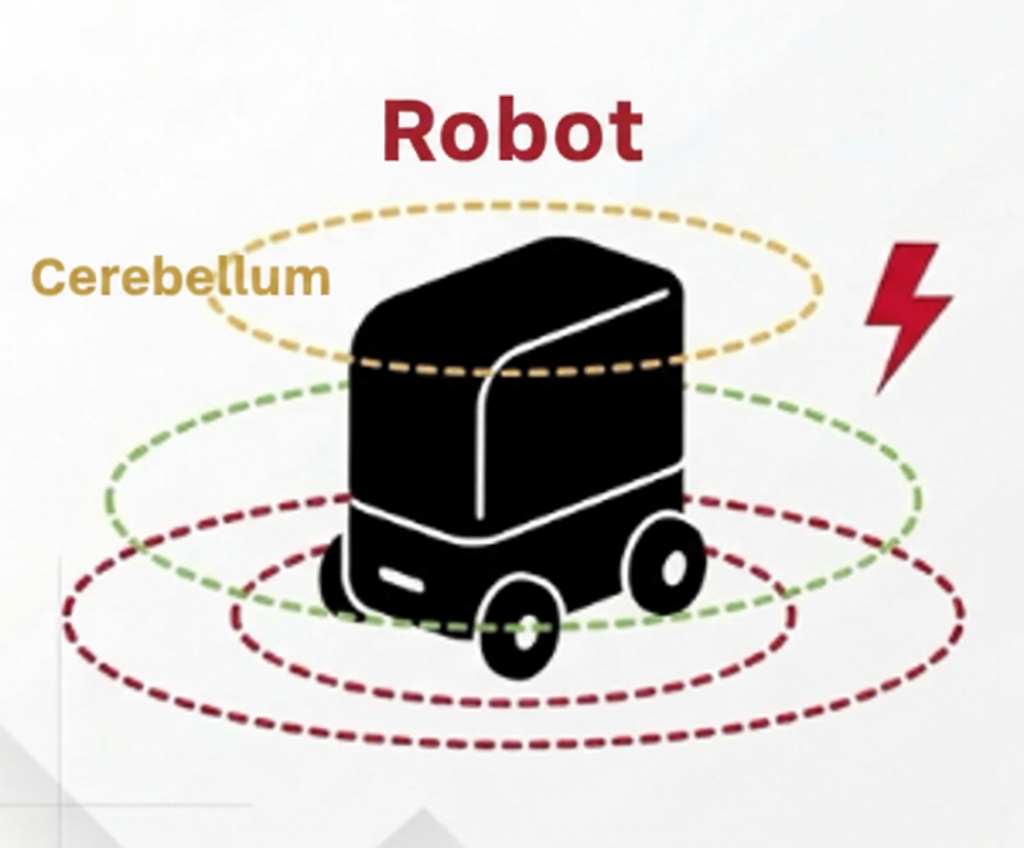
Role: Role: judgement and action executed immediately.
Compute: Compute: real-time control that does not tolerate latency.
Structure: Structure: sensors, actuators and edge processing at the field site.
On-site execution teams are optimally orchestrated from the cloud.
Outstanding benefits of the distributed architecture
The cloud breaks through physical and security barriers.
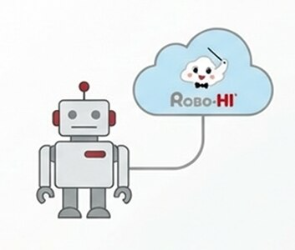
Use affordable hardware
Even low-cost robots with limited autonomous mobility can be deployed — ROBO-HI OS compensates for their weaknesses.
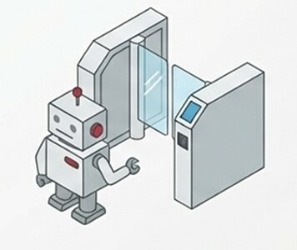
Remove physical barriers
Robots cannot cross elevators, shutters or security doors alone — but the operating system integrates with the infrastructure to assist them.

Eliminate security concerns
A globally trusted operating system for managing robots, so users can deploy with confidence regardless of where robots are manufactured (hardware abstraction and safety management).
ROBO-HI OS technology integrates Physical AI
What is Physical AI (ROBO-HI OS definition)?
ROBO-HI OS views the evolution of AI as a transition from "managing information" to "controlling the physical world". Moving from communication tools (driven and judged by humans) to systems that autonomously judge and control the physical world (people, robots, devices) is the essence of Physical AI.
Architecture that realizes Physical AI: "Distributed brain"
Big brain (cloud): ROBO-HI OS with advanced judgement and compute, connected to infrastructure and orchestrating the whole.
Small brain (edge): physical robots performing real-time control, reacting instantly via sensors and actuators.
The cloud big brain acts as the conductor of the orchestra, while robots in the field (small brain) act immediately — this is the core of ROBO-HI Physical AI. The autonomous-mobility software "IZAC" has been deployed in the cloud for 25 years.
Benefits of deploying Physical AI via the distributed architecture
Use affordable hardware: even low-cost robots with limited autonomous mobility are compensated and empowered by ROBO-HI OS.
Overcome physical barriers: elevators, shutters and security doors cannot be crossed alone — but the OS integrates with infrastructure to handle them.
Guarantee security: by abstracting and managing hardware, deployment is safe regardless of robot country of origin.
Concrete application examples of Physical AI
-
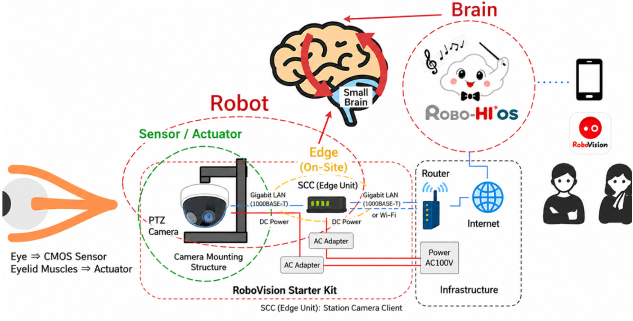
RoboVision (Remote-control app and AI robot camera viewer)
Big brain: ROBO-HI OS. Small brain: PTZ camera + SCC. Eye: CMOS sensor. Vision infrastructure extends the function of the human eye. Physical AI perceives and controls remote physical space. -
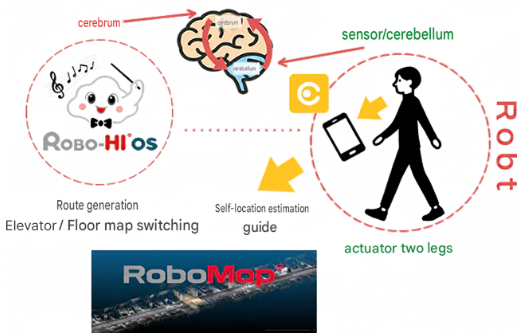
EYECAN (Indoor navigation app without GPS)
Big brain: ROBO-HI OS (route generation, map switching). Small brain: humans + smartphone (self-position estimation and guidance). Concept of "humans walking like robots". Physical AI leverages the human body as an edge device. -
HearTomo (Cardiovascular health visualization app)
Apple Watch × ROBO-HI OS. Uses physiological sensors as infrastructure. Physical AI grasps body state and provides bio-feedback.
Summary
ROBO-HI OS technology combines Physical AI + cloud AI with physical robots to autonomously control the field. More than a simple automation tool, ROBO-HI OS is an intelligent operating system that directly controls the physical world, integrating many physical devices — cameras, smartphones and wearables — into a single ecosystem.
ROBO-HI OS technology integrates Physical AI
RoboVision — Remote-control app and AI robot camera viewer
Goal: extend the function of the human eye by popularizing vision infrastructure.
- • Big brain = ROBO-HI OS
- • Small brain, sensors, actuators = Robot (PTZ camera + SCC)
- • Eye = CMOS sensor
- • External muscle = actuator.

EYECAN — Indoor navigation app without GPS
Goal: popularize 3D map infrastructure with the concept "Humans walk like robots".
- • Big brain = ROBO-HI OS → route generation, elevator/floor map switching
- • Small brain, sensors, actuators = Robot (humans + smartphone) → self-position estimation and guidance

HearTomo — Cardiovascular health visualization app
Goal: popularize physiological sensors.
Visualizes cardiovascular health and emotional state for users themselves, encouraging self-understanding. This creates a bio-feedback effect that helps users improve themselves and enables sophisticated, communicative robot services.