"THE WORLDFOLIO" is a news outlet trusted by readers worldwide for more than 20 years.
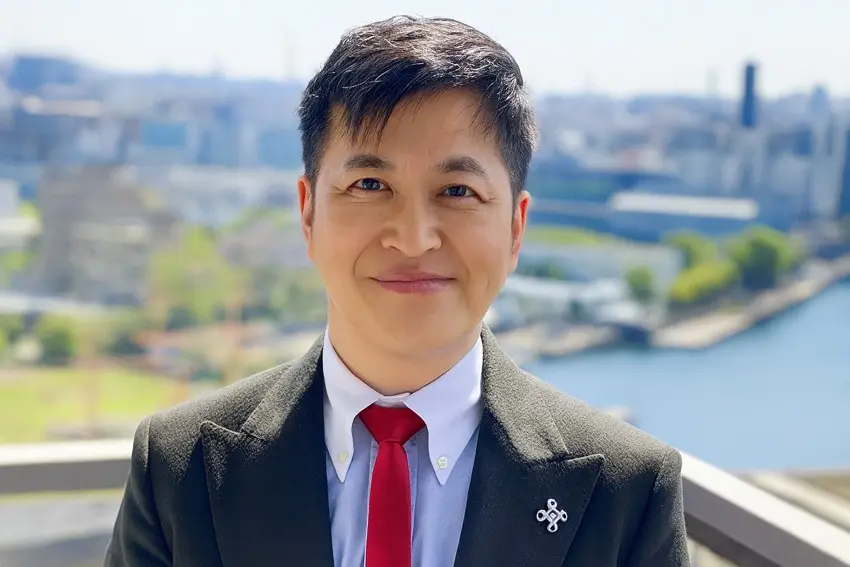
Mr. Taniguchi, our company’s representative, shared his vision for optimising the operation of diverse robots through "ROBO-HI OS", along with real-world deployment examples.
INTERVIEW
Question: Your company is known for developing the ROBO-HI® OS robot operating system. However, selling an operating system is very different from selling physical robots. Why did you decide to focus on this area, and how do you communicate its value?
Answer: As you say, selling an operating system is a major challenge. Unlike robots — which are tangible products — an operating system is just a platform running in the background. People tend to be more interested in the robots themselves. So we even renamed the company to emphasise that we are not just a robot maker but a company providing an operating system.
Today, robots still operate in silos, like computers in the early days. Our mission is to provide a common network and interface for them all. The rename reflects that commitment. An operating system is "invisible" and hard to make tangible, yet it is the indispensable foundation of any robot network. That is also why we focus all our energy on it.
Question: In Japan, the mindset is still often "buy 10 cleaning robots separately" or "buy 1 security robot separately" — treated as siloed pieces. How does your system change that thinking?
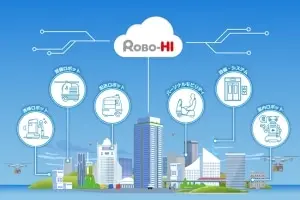
Answer: That is exactly the current state. Operations are fragmented, and many people find them "too complex". However, at TAKANAWA GATEWAY CITY — a project developed by East Japan Railway — we deployed the multi-vendor ROBO-HI robot platform. As a result, delivery robots can be controlled at the same time as cleaning and security robots, all coordinated. From a single screen you can command the entire fleet. This is very much like what Windows 95 did in standardising the PC network.
At TAKANAWA GATEWAY CITY, thanks to ROBO-HI, robots from many different vendors are connected and operate cooperatively across the entire district. When people witness the real-world results, they understand what true progress looks like. Changing mindsets across Japan will take time, but once it starts to spread it will grow quickly — like the PC boom before.
Question: What advantages do Japanese robots have over foreign robots?
Answer: Japanese robots stand out for their "one-stop" capability — moving smoothly both indoors and outdoors. Imagine a delivery robot: starting from a convenience store, passing through a gate, taking the elevator, then delivering to a specific room. Japanese robots are designed like compact cars, with the ability to handle that entire chain of tasks. This comes from the experience, components, and supply chain of the automotive industry — sensors, safety, durability.
They can recognise traffic signals, withstand rain and wind, and operate stably outdoors. In particular, Japanese security robots are trusted and deployed in buildings. Meanwhile, for simple tasks like cleaning, cheaper overseas robots are preferred. In other words, "the right tool for the right job". ROBO-HI’s strength is that it can integrate and manage both kinds.

Question: Japan has struggled to globalise consumer technologies like the smartphone. What will ROBO-HI do to avoid the "Galapagos syndrome" and expand to the world?
Answer: True, Japan does not have consumer-tech giants like GAFA. But ROBO-HI is not B2C — it is B2B, i.e. enterprise infrastructure. Our position is similar to Oracle or SAP. Our customers are large facilities such as office buildings, airports, and hospitals. Buying decisions are made at the organisational level, where trust, stability, and integration capability matter most. Since 2023, ROBO-HI has been deployed in more than 20 large-scale facilities, and we believe this is an area where Japan can create a global standard.
Question: You have recently partnered with Marubeni in airport logistics. Could you elaborate on this partnership?
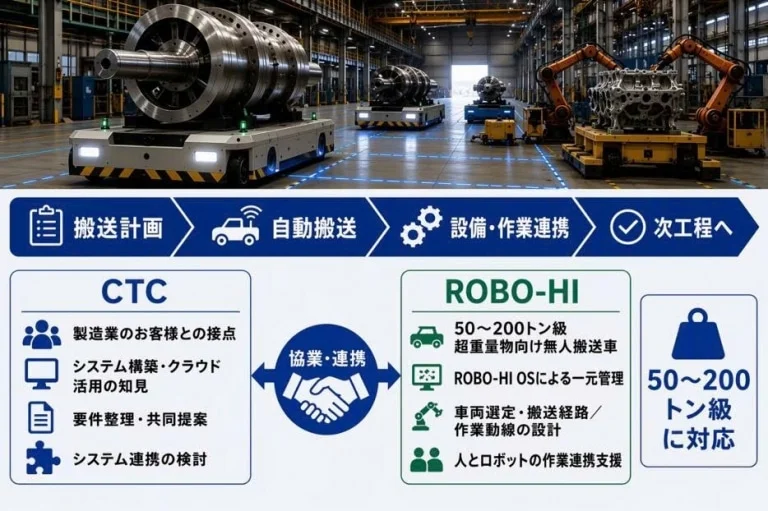
Answer: Marubeni Corporation handles ground operations for Japan Airlines (JAL) and All Nippon Airways (ANA). Cargo handling is a major challenge at airports, and the labour shortage has worsened since the pandemic. We started trials in 2019, and after five years we completed the final phase this year. From next year on we will formally deploy unmanned cargo transport services at airports. There is very little competition in this area, so it is an important opportunity for startups.
Question: In 2031, your company will celebrate its 30th anniversary. What goals do you set for that milestone?
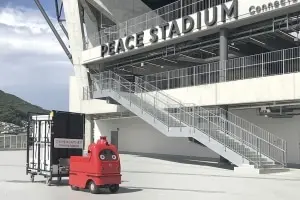
Answer: First, we will focus on deploying the system into large-scale facilities such as shopping centres, office towers, stadiums, and airports. Then, if costs come down over the next three years, we will expand to medium and small facilities. Like SAP, we aim to build a partner network of IT providers to drive even wider adoption.
Source: "THE WORLDFOLIO"
Title: One Cloud to Rule Them All
Article link: https://www.theworldfolio.com/interviews/one-cloud-to-rule-them-all/7136/